Structured curriculum
Build clear scientific and professional foundations.
A professional undergraduate medical program combining classical Ayurveda, modern scientific understanding, diagnosis, treatment and supervised clinical training. Study at YSS Education, Kudligi.
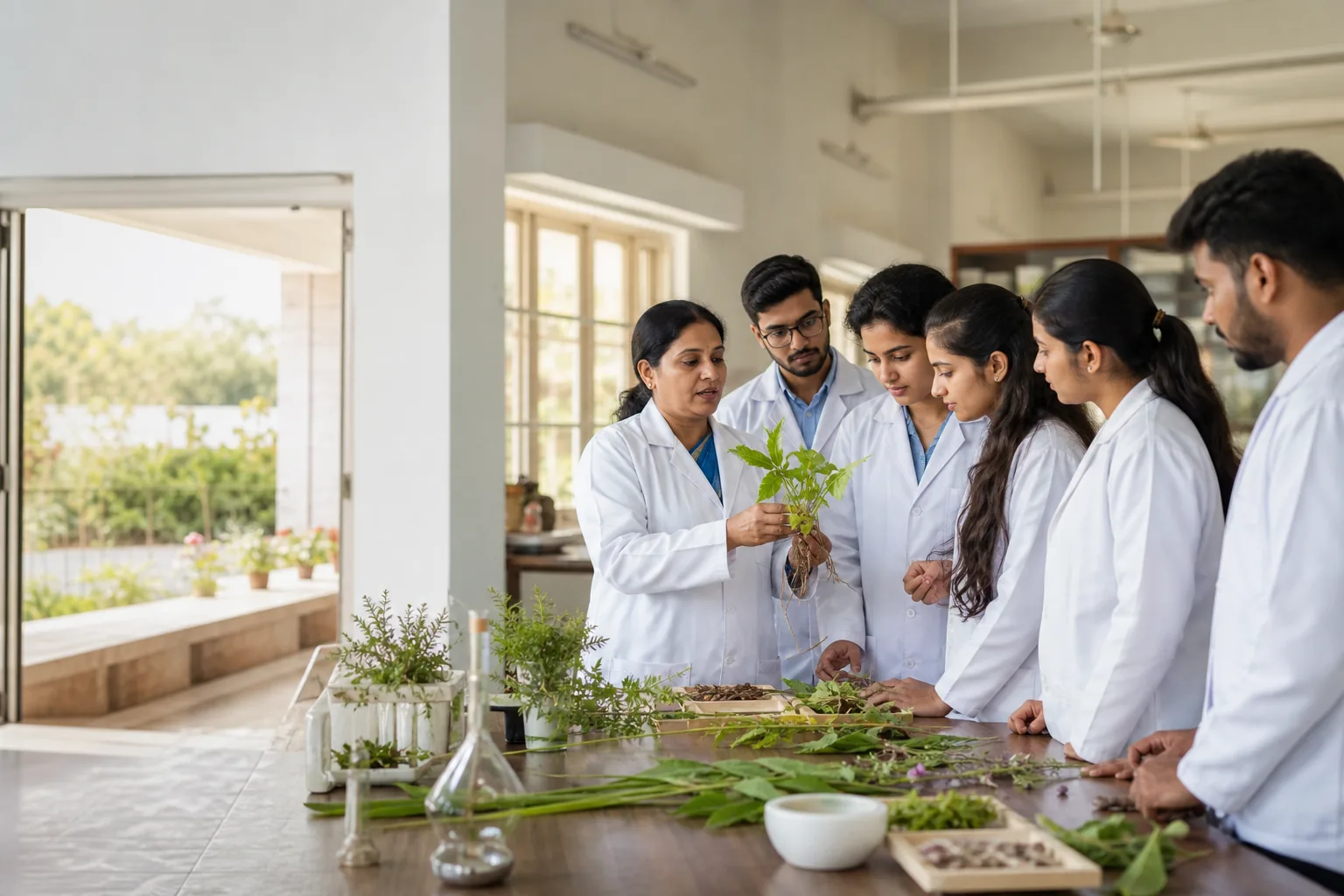
A professional undergraduate medical program combining classical Ayurveda, modern scientific understanding, diagnosis, treatment and supervised clinical training.
Explore the BAMS programStudents connect academic understanding with laboratories, demonstrations, mentoring and professional exposure.
Build clear scientific and professional foundations.
Learn through laboratory or clinical demonstration appropriate to the course.
Receive academic mentoring and feedback throughout the program.
Understand safety, ethics, communication and accountable practice.
A Kudligi campus serving students from nearby communities.
Ask about library, computer, hostel and student-support facilities.
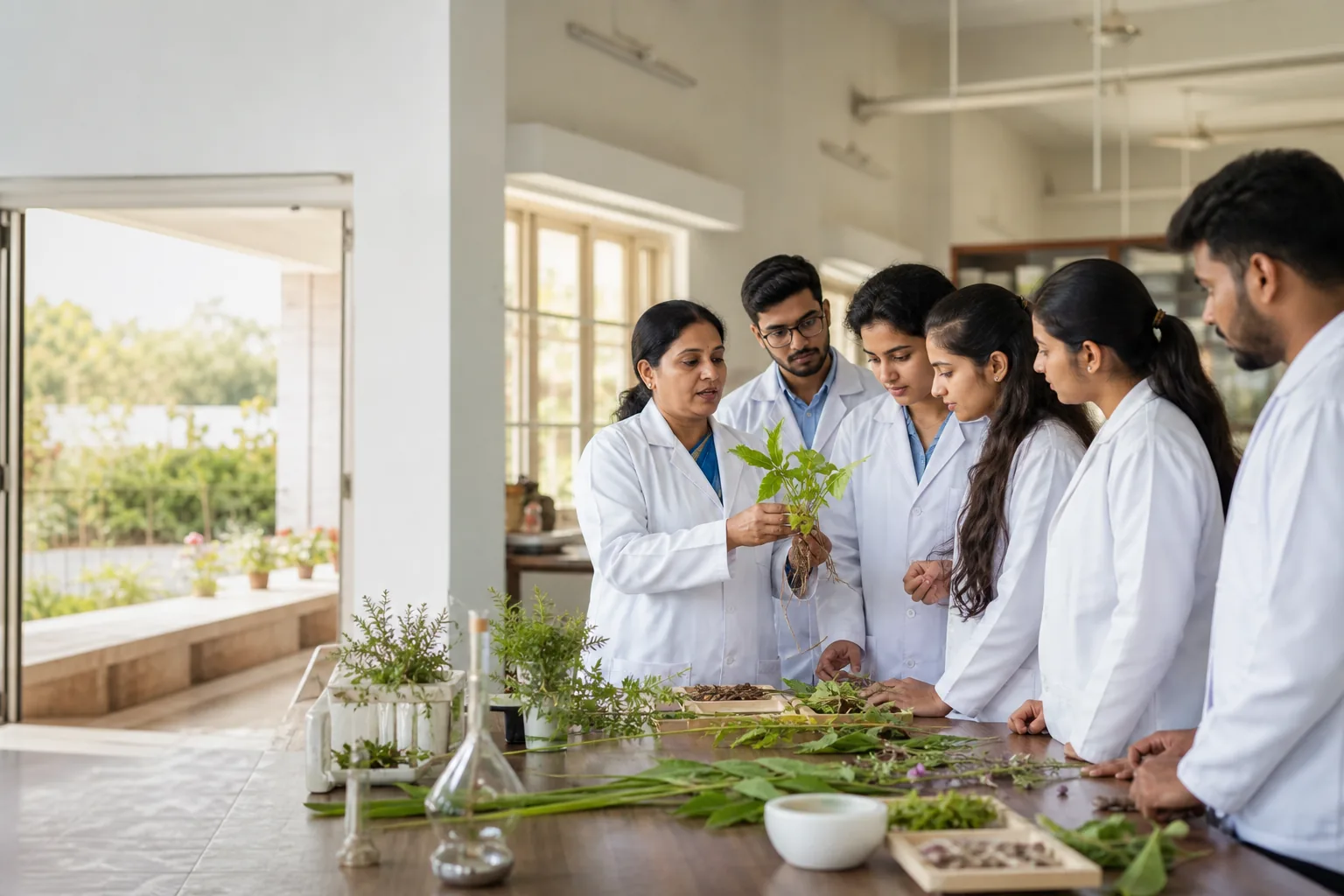 Supervised practical learning
Academic departments, practical halls, laboratories, medicinal plant study, the herbal garden and attached-hospital exposure support the development of responsible Ayurvedic medical professionals.
Final subjects and structure follow the applicable approved curriculum.
No long online form is required.
Share your qualification and course interest.
Understand eligibility, fees and timelines.
Provide the documents requested by the institution.
Complete the approved admission process.
Employment depends on registration, qualifications, experience and employer requirements; no placement is guaranteed.
Contact admissions for current fees, availability and institution-approved criteria.
BAMS is 5.5 years including internship. Confirm the current approved academic structure with the admission team.
10+2 with PCB and qualification through NEET under current rules. Final eligibility is governed by current institutional and regulatory requirements.
Academic departments, practical halls, laboratories, medicinal plant study, the herbal garden and attached-hospital exposure support the development of responsible Ayurvedic medical professionals.
Contact admissions to confirm current hostel availability, arrangements and applicable charges.
Use the WhatsApp or phone buttons on this website to speak directly with the official admission team.
Common documents include marks cards, transfer and migration certificates where applicable, identity proof, photographs and relevant eligibility or category documents. Confirm the final list with admissions.
Speak directly with the admission team about eligibility, documents, fees, practical training, hostel support and a campus visit.